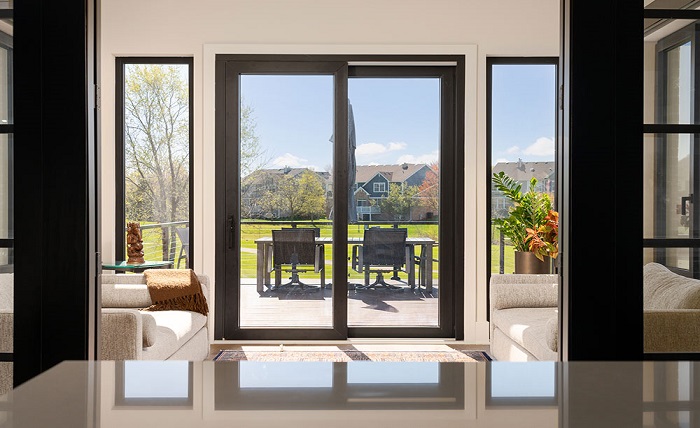
Most real estate investors have a short list of go-to improvements: kitchen refresh, bathroom update, new flooring, fresh paint. These are the standard rehab plays – visible, intuitive, easy to comp against similar listings. Window upgrades rarely make that list. They’re expensive per unit, not particularly photogenic in a listing photo, and the ROI conversation typically stops at ‘you’ll get some energy savings back eventually.’
That’s the wrong framework. When you analyze window replacement as an investment decision – not a home improvement decision – the numbers look substantially different. You’re looking at a capital expenditure that generates returns across four simultaneous channels: whole-home appraised value uplift (7–11% per NAHB research), direct energy cost reduction that improves NOI on income-producing properties (12–25% per DOE projections), a defensible rental premium in competitive markets, and accelerated tax depreciation that returns capital in Year 1 rather than over the holding period. Stack those four, and window replacement moves from ‘deferred maintenance’ to ‘forced appreciation play’ in the investment ledger.
What follows is the data behind that argument – sources, formulas, and a pro forma template you can drop into your next acquisition analysis.
What Does Window Replacement Actually Do to a Property’s Value?
The National Association of Home Builders documents a 7–11% whole-home value increase from premium window replacement – the most-cited figure in this space, and one that investors frequently misread. The key word is ‘whole-home.’ A kitchen remodel improves one room. A bathroom remodel improves one room. Window replacement improves every room’s light quality, thermal comfort, noise environment, and energy performance simultaneously. The value lift reflects a whole-envelope upgrade, not a single-feature addition.
For investment analysis, the implication is straightforward: on a $500,000 property, 7–11% is $35,000–$55,000 in projected value uplift. On a $750,000 property, it’s $52,500–$82,500. The install cost for a full 15-window replacement using premium systems runs $8,000–$20,000. At the midpoint of both ranges, you’re looking at a $45,000 value gain on a $14,000 capital expenditure – a 3.2x return before energy savings and tax benefits are counted. No kitchen remodel produces those numbers.
The NAHB Number and What It Means Across Different Price Points

The percentage is consistent across market segments; the dollar value scales with property price. This is the aspect of window upgrade ROI that most analyses miss. A 9% value uplift (midpoint of NAHB range) on a $300,000 property is $27,000. On a $600,000 property it’s $54,000. On a $1,000,000 property it’s $90,000. The install cost for premium windows scales far more slowly than property value – a 15-window installation in a luxury property runs $20,000–$45,000, not three times the cost of a standard installation. The ROI multiple expands significantly as property value increases.
This has practical implications for portfolio strategy: window upgrades as a forced appreciation lever are disproportionately powerful on higher-value properties where the absolute dollar return on the percentage uplift is largest. An investor running the same analysis on a $250,000 workforce housing property and a $750,000 suburban single-family will find a substantially better return multiple on the higher-value asset – even if the cost-per-window is somewhat higher for the premium finishes appropriate at that price point.
Do Appraisers Actually Credit Energy-Efficient Windows?
The empirical answer is yes, with documentation. Research from Lawrence Berkeley National Laboratory and the Department of Energy’s studies on energy efficiency and home value find a consistent ‘green premium’ in residential transactions: ENERGY STAR-certified homes sell for an average of 3–5% more than comparable non-certified properties, controlling for other variables. The premium is stronger in higher-energy-cost markets – precisely the Northern Zone states where ENERGY STAR Most Efficient window requirements are most stringent.
The mechanism is Fannie Mae Form 1007 – the Residential Green and Energy Efficient Addendum. Appraisers completing this form document NFRC-certified window performance, ENERGY STAR qualification status, and measurable energy cost improvements. Properties with documented, certified energy-efficient upgrades – as opposed to undocumented owner claims – command demonstrably higher appraised values through this methodology. The practical takeaway for investors: request full NFRC certification and ENERGY STAR documentation from your window supplier before installation, and keep it in your property file. It’s the difference between an appraiser noting ‘owner reports new windows’ and an appraiser documenting ‘NFRC-certified triple-glazed units, U-Factor 0.20, ENERGY STAR Most Efficient – replaces 2003 double-pane units with U-Factor 0.35.’
NAR’s Remodeling Impact Report adds the buyer-side data point: new windows ranked as the second most important feature for buyers evaluating a property, after roof condition. 95% of Realtors surveyed recommended window upgrades to sellers preparing a listing. These are not comfort metrics – they’re market preference data that feed directly into days-on-market and sale price relative to ask.
How Does Window Replacement Compare to Other Renovations by ROI?
Remodeling Magazine’s annual Cost vs. Value Report is the standard reference for renovation ROI, and it tells a story that investors frequently misinterpret. The report ranks renovations by ‘cost recouped at resale’ – the percentage of install cost returned at sale price. Steel door replacement tops the list at 188%. Kitchen remodels land at 52–59%. Window replacement comes in at 72–80%.
The problem with this metric for investment analysis: it measures cost recovery as a percentage of install cost, not total dollar return or whole-home value impact. A $2,000 steel door replacement returning 188% generates $3,760 in resale value – a $1,760 net gain. A $14,000 window installation returning 80% generates $11,200 in direct cost recouped – a $2,800 net loss by this metric alone. But the NAHB whole-home value uplift (7–11%) is not captured in the Cost vs. Value report’s cost-recouped calculation, because it measures the broader property value effect rather than the direct transaction premium attributable to the single renovation item. Add the 7–11% whole-home lift to the cost-recouped figure, and the window upgrade picture changes fundamentally.
Table 1 – Home Renovation ROI Comparison 2026: Investment Lens
Renovation
Avg. Installed Cost
Cost Recouped at Resale
Whole-Home Value Lift
NOI Impact (rental)
Best Use Case
Window Replacement (premium)
$8,000–$20,000
72–80% cost recouped (NARI 2024)
7–11% whole-home value increase (NAHB)
HIGH – energy cost reduction + rental premium + tenant retention
Any property type; highest ROI in Northern Zone climates
Steel Entry Door Replacement
$1,500–$4,500
188% cost recouped (Remodeling Magazine 2024 Cost vs. Value)
Minimal whole-home lift – curb appeal only
LOW – no energy impact
Best single-item ROI but limited total dollar return on high-value properties
Fiberglass Entry Door
$3,000–$6,000
97–116% cost recouped
Minimal whole-home lift
LOW
Similar to steel door; limited scale
Major Kitchen Remodel
$40,000–$70,000
52–59% cost recouped
Limited – single room only
NEUTRAL to NEGATIVE – cost rarely recovered on rental grade
High disruption, long vacancy; rarely the right call on investment property
Mid-Range Bath Remodel
$15,000–$30,000
60–67% cost recouped
Limited – single room only
NEUTRAL – nominal rental premium in most markets
Useful for class-B to class-A repositioning; limited ROI standalone
Vinyl Siding Replacement
$12,000–$25,000
67–80% cost recouped
Moderate – exterior envelope improvement
LOW – minor energy savings only
Good curb appeal play for flip; limited rental NOI impact
Roof Replacement (asphalt)
$12,000–$22,000
60–68% cost recouped
Necessary maintenance; limited uplift beyond deferred maintenance correction
NEUTRAL – prevents value loss, doesn’t create it
Essential deferred maintenance; not a value-creation play on its own
HVAC System Upgrade
$6,000–$15,000
50–60% cost recouped
Moderate – system age affects appraisal
MEDIUM – energy savings improve NOI if landlord pays utilities
Strong complement to window upgrade for full-envelope efficiency play
Why the Cost-Recouped Metric Understates Window Upgrade Returns
Three return streams that Cost vs. Value doesn’t capture: energy cost savings (ongoing NOI improvement), rental premium (income effect on cap-rate valuation), and NAHB’s whole-home value lift (which operates through a different mechanism than the single-renovation premium the report measures). A kitchen remodel improves one room and is visible to buyers as a single upgrade. Window replacement changes how every room in the house feels, looks, sounds, and costs to operate – and the pricing effect in a buyer’s offer reflects that whole-home quality improvement, not just the line-item value of new windows.
The cleanest way to understand this: run the same analysis on two otherwise identical properties, one with a $14,000 premium window installation and one with a $14,000 kitchen upgrade. The window property has lower utility bills, better noise reduction in every room, improved comfort year-round, and a whole-home value lift that affects the appraiser’s comparable selection. The kitchen property has a nicer kitchen. For a sophisticated buyer calculating total cost of ownership, the window property is the better financial proposition. The market, imperfectly and with lag, prices that in.
What Is Forced Appreciation – and How Do Windows Factor In?
Forced appreciation is the investor’s primary tool for creating value independent of market cycles. Rather than waiting for a market to appreciate – a passive strategy that depends on conditions outside the investor’s control – forced appreciation executes value creation through deliberate capital deployment. Rehab, repositioning, and operational improvements that increase NOI are the three standard mechanisms.
Window upgrades generate forced appreciation through both channels simultaneously. They improve appraised value directly (the NAHB whole-home lift), and they improve NOI through energy cost reduction and rental premium (which feeds into income-approach appraisals on investment properties). An appraiser valuing an income-producing property uses a cap rate formula: Value = NOI ÷ Cap Rate. If a $15,000 window installation adds $800/year to NOI through energy savings and rental premium on a property in an 8% cap rate market, the income-approach value increase is $10,000 ($800 ÷ 0.08). Add the direct appraisal uplift and the forced appreciation total significantly exceeds the install cost.
The BRRRR Calculation: Windows Before the Cash-Out Refi
The BRRRR strategy – Buy, Rehab, Rent, Refinance, Repeat – is built on forced appreciation creating appraised value that enables a cash-out refinance recovering the initial capital deployment. The refinance amount depends on the appraised value after rehab; every dollar of forced appreciation enables a higher LTV-equivalent refinance proceed. Window upgrades are an efficient forced appreciation lever in this context because they generate both direct appraisal uplift and NOI improvement – both of which the appraiser captures.
Worked example: a $350,000 Northern Zone property with 15 builder-grade double-hung windows. Install cost for premium tilt & turn replacement: $13,500. Expected whole-home value increase: 7–11%, or $24,500–$38,500. Expected NOI improvement: $750/year (energy savings + rental premium). Income-approach value increment at 7.5% cap rate: $10,000. Total appraised value uplift: $34,500–$48,500 on a $13,500 investment. At 75% LTV on the post-rehab appraisal, the window investment is fully recovered in refi proceeds within 12–18 months – with the energy savings and rental premium continuing to generate returns throughout the hold period.
Payback Period and Cash-on-Cash Return: The Window Upgrade Model
For buy-and-hold investors not pursuing a refi strategy, the payback calculation runs on annual cash flows. The model has three inputs: energy cost reduction (direct NOI if landlord pays utilities), rental premium (incremental monthly rent attributable to demonstrated energy efficiency), and Year-1 tax benefit (bonus depreciation or §25C credit depending on property type). The table below models these across common investment property scenarios and Northern Zone / North-Central Zone markets where the energy savings are largest.
Table 2 – Window Upgrade ROI Model by Property Type and Climate Zone (2026)
Property Type
Avg. Window Install Cost
Est. Annual Energy Saving
Est. Annual Rental Premium
Year-1 Tax Benefit
Net Payback Period
Single-Family, Northern Zone (NY/NJ/PA/MA/CT) – landlord pays utilities
$12,000–$18,000 (15 windows)
$420–$700/yr (DOE: 12–25% of $3,200 avg. energy cost)
$600–$1,200/yr additional rent (energy-efficient premium, urban/suburban markets)
$1,200 §25C credit (primary); or $2,000–$4,000 bonus depreciation (investment)
5–9 years (all-in: energy + rental premium + tax benefit)
Single-Family, North-Central Zone (IL/OH/CO/MI) – landlord pays utilities
$10,000–$16,000
$320–$560/yr
$400–$900/yr
Same as above
6–10 years
Multi-Family (2–4 unit), Northern Zone – owner pays common utilities
$20,000–$35,000 (full building)
$800–$1,400/yr building-wide
$50–$100/unit/month premium in energy-efficient markets
- 179 up to full cost Year 1 (investment property); consult tax advisor
4–7 years with full Year-1 §179 expensing
Fix-and-Flip, Northern Zone – exit within 12 months
$8,000–$14,000
N/A (not holding)
N/A
No depreciation benefit on flip inventory
Payback via resale premium: 7–11% value lift on $350K = $24,500–$38,500 vs. $8,000–$14,000 cost
Luxury Single-Family ($800K+), any zone – premium window upgrade
$20,000–$45,000 (aluminum systems)
$500–$900/yr
$150–$300/month premium (premium finishes expected at this price point)
Bonus depreciation or §25C depending on use
3–6 years – amplified by absolute dollar value of 7–11% on high-value asset
BRRRR Property – Northern Zone, cash-out refi within 18 months
$10,000–$16,000
$380–$640/yr
$400–$800/yr
Year-1 depreciation benefit
Primary return via appraised value uplift enabling larger refi proceeds – refi recovery can exceed install cost in 12–18 months
Do Energy-Efficient Windows Increase Rental Income?
The rental premium case has two distinct versions depending on whether the landlord or tenant pays utilities – and investors often conflate them to their analytical detriment. Get this distinction right, because it changes both the magnitude of the return and how you underwrite it.
Landlord-pays-utilities: energy cost reduction is direct NOI improvement. If the building spends $4,200/year on heating and cooling and window replacement reduces that by 18%, that’s $756/year flowing directly to the bottom line. Capitalized at an 8% cap rate, $756 in annual NOI equals $9,450 in property value. This is not a soft benefit – it’s a quantifiable, appraisable, bankable value increment supported by a utility bill comparison any appraiser can verify.
Tenant-pays-utilities: the case is a rental premium argument. Demonstrated energy efficiency is a documented, marketable feature in competitive rental markets – particularly in Northern Zone metros where tenant energy costs are substantial. Market data from urban and suburban rental markets in the Northeast shows a $50–$100/month premium for properties with ENERGY STAR-rated features versus comparable non-certified units. At $75/month on a single-family, that’s $900/year in additional gross revenue – capitalized at $11,250 in value at an 8% cap rate.
NOI Math: Energy Cost Reduction as a Direct Cash Flow Lever
The NOI formula for this analysis: (Gross Rents + Energy Savings if landlord-pays) − Operating Expenses = NOI. Window replacement affects both sides of that equation for landlord-pays properties – it reduces operating expenses directly (energy line) while maintaining gross rents. For tenant-pays properties, it affects gross rents (rental premium) while leaving operating expenses unchanged. In either case, the NOI impact is real, measurable, and documentable.
As a concrete benchmark: triple-glazed systems from European manufacturers like OKNOPLAST (e.g. https://oknoplast.us/windows/upvc-windows/) achieve U-Factors of 0.20 – the ENERGY STAR Most Efficient threshold – which the DOE projects to reduce heating and cooling costs by 12–25% versus standard double-pane alternatives. On a rental property with $3,600/year in HVAC costs paid by the landlord, that’s $430–$900 in direct annual NOI improvement. Capitalized at a 7.5% cap rate, the NOI improvement alone adds $5,730–$12,000 to the income-approach appraised value of the property.
Tenant Retention and Vacancy Rate: The Soft ROI Case
Vacancy is the single largest NOI destroyer in residential rentals, and tenant turnover is its primary cause. Turnover costs – lost rent during vacancy, cleaning, minor repairs, marketing, and leasing fees – average $1,000–$3,000 per vacancy event depending on market. Properties that consistently perform on comfort, utility costs, and maintenance quality show measurably lower turnover rates than comparable properties that don’t.
Window quality sits at the intersection of all three of those retention drivers: it affects how comfortable the property is in winter and summer, it directly affects the tenant’s utility bill, and new premium windows are among the highest-visibility upgrades a landlord can make during a tenancy (tenants notice immediately when drafts disappear and noise decreases). The quantified retention value is conservative but real: if premium windows reduce annual turnover probability by 15 percentage points on a property that otherwise turns every 2.5 years, the expected value of that reduction is roughly $450–$1,350/year in avoided turnover costs. Add that to the energy and rental premium cash flows, and the all-in annual benefit case strengthens further.
What Are the Tax Implications of Window Replacement on Investment Properties?
Tax treatment is where the investment property case for window upgrades diverges most sharply from the homeowner case – and where most analyses fall short. The federal §25C energy credit applies to primary residences only. Investment properties operate under a different set of rules that are in many cases more favorable in Year 1 but require active planning to capture.
The foundational question is classification: is a window replacement a capital improvement or a repair? Full window replacement – removing and replacing complete window units including frames – is a capital improvement under IRS guidelines. It creates a new depreciable asset. Replacing only glass or weatherstripping in existing frames may qualify as a repair, expensed immediately. The scope-of-work documentation from your contractor directly determines which treatment applies, so be specific in the invoice: ‘full window unit replacement including frame, sash, glazing, and hardware’ is unambiguous capital improvement language.
Capital Improvement vs. Repair: The Classification That Determines Your Deduction
Capital improvement classification means the asset enters your depreciation schedule. Residential rental properties depreciate over 27.5 years under standard MACRS straight-line depreciation. A $15,000 window installation depreciated over 27.5 years generates $545/year in depreciation deductions – at a 32% marginal rate, that’s $174/year in tax savings, or $4,800 over the full depreciation period. Useful, but not the compelling Year-1 story.
The compelling Year-1 story is cost segregation plus accelerated depreciation. Windows and other building components can potentially be segregated into shorter-life asset classes (5-year or 15-year property) through a cost segregation study, enabling significantly faster depreciation. For most residential investors doing single-property renovations, cost segregation studies cost $3,000–$8,000 and are economically justified only on larger projects. The more practical accelerated depreciation tools for single-property investors are §179 and bonus depreciation.
Bonus Depreciation and §179: Accelerating the Deduction
Bonus depreciation allows a specified percentage of a qualifying asset’s cost to be deducted in Year 1 rather than over the recovery period. Under the Tax Cuts and Jobs Act phase-down schedule, the bonus depreciation rate for 2026 is 40% – down from 60% in 2024 and 80% in 2023. On a $15,000 window installation, 40% bonus depreciation generates a $6,000 deduction in Year 1. At a 32% marginal tax rate, that’s approximately $1,920 in Year-1 tax savings on the window investment. The remaining $9,000 continues to depreciate over the standard schedule.
- 179 expensing allows immediate deduction of qualifying property up to the annual IRS limit (approximately $1,220,000 in 2026 for all qualifying property placed in service during the year). For most residential investors with window replacement costs of $8,000–$20,000, §179 can expense the full installation cost in Year 1 – subject to the rule that §179 deductions cannot create or increase a net loss from the activity. The interaction of §179, bonus depreciation, passive activity rules, and your specific tax situation requires consultation with a qualified tax professional. The point here is that the Year-1 tax benefit on investment property window replacement is meaningfully larger than the homeowner §25C credit in most scenarios – it’s just less widely understood.
Manufacturers like OKNOPLAST provide complete NFRC certification documentation and itemized installation invoices for every project – the paperwork foundation that depreciation and §179 filings require. ‘Placed in service’ date, asset description, cost basis, and performance certification are all standard deliverables that support clean tax filing.
§25C for Primary Residence: Up to $600 Per Window (2026)
For primary residence owners, the Energy Efficient Home Improvement Credit (IRC §25C) covers up to $600 per qualifying window, capped at $1,200 per year across all qualifying improvements. Windows must hold ENERGY STAR Most Efficient certification – U-Factor of 0.20 or lower in Northern Zone states, 0.22 or lower in North-Central Zone. Claim on IRS Form 5695 with your annual tax return. The credit is non-refundable – it reduces tax liability but does not generate a refund beyond that. The $1,200 annual cap means a 15-window replacement project would require two tax years to capture the full credit across all qualifying windows. OKNOPLAST’s PAVA triple-glazed tilt & turn system is certified at U-Factor 0.20 with full NFRC documentation, meeting the Most Efficient threshold for all U.S. climate zones. Consult a tax professional to confirm eligibility for your specific situation.
Table 3 – Tax Treatment of Window Replacement: Primary vs. Investment Property (2026)
Property Type
IRS Classification
Deduction Method
Year-1 Tax Benefit (example: $15,000 install)
Documentation Required
Notes
Primary Residence
N/A – not a business asset
Energy Efficient Home Improvement Credit (IRC §25C): up to $600/window, $1,200/year cap
Up to $1,200 direct tax credit (non-refundable)
NFRC certificate + ENERGY STAR Most Efficient designation + IRS Form 5695
Must be ENERGY STAR Most Efficient certified; primary residence only; consult tax professional
Residential Rental Property (1–4 units)
Capital Improvement (full replacement = new asset)
Depreciated over 27.5 years (straight-line) OR §179 expensing up to IRS annual limit OR bonus depreciation (2026: 40% first year)
$15,000 × 40% bonus = $6,000 deduction Year 1 at 32% marginal rate = ~$1,920 tax savings
Contractor invoices + asset description + placed-in-service date; Schedule E
Bonus depreciation rate was 60% in 2024, 40% in 2026 under current TCJA phase-down schedule; confirm with tax advisor
Commercial/Mixed-Use Property
Capital Improvement
Depreciated over 39 years OR §179 OR bonus depreciation
- 179 can expense full cost in Year 1 up to annual limit (2026: $1,220,000 cap) – most window projects fully expensable
Same as rental + Form 4562
Significant Year-1 tax benefit; particularly powerful for multi-unit buildings
Fix-and-Flip (dealer inventory)
Inventory cost – not a capital asset
Added to cost basis; reduces taxable gain at sale
No separate deduction – reduces short-term capital gain at disposition
Cost documentation for basis calculation
No depreciation benefit; ROI is pure resale margin play
Which Properties and Markets See the Highest Returns on Window Upgrades?
Return on window upgrades is not uniform across property types, geographies, or investment strategies. Three variables dominate the analysis: climate zone (determines energy savings magnitude and tax credit tier), utility payment structure (landlord vs. tenant pays), and exit strategy (hold, flip, or BRRRR).
The highest all-in ROI scenario: a Northern Zone buy-and-hold single-family rental where the landlord pays utilities, targeting a cash-out refinance within 18–24 months. Energy savings land at the high end of the DOE range, rental premium is achievable in competitive Northeast markets, Year-1 bonus depreciation recovers capital faster, and the appraisal uplift at refi maximizes LTV-based proceeds. The lowest-return scenario: a Southern Zone owner-occupied property with no refi planned and tenant-paid utilities – the energy savings are smaller, the rental premium case is weaker in most Southern markets, and the §25C credit is the only tax lever available.
Climate Zone ROI: Why Northern Markets Outperform
The financial case for window upgrades strengthens as you move north – for three compounding reasons. First, heating and cooling costs are higher in Northern Zone states (average $3,200–$4,500/year for single-family vs. $2,200–$3,200 in South-Central), which means the 12–25% DOE savings estimate represents a larger absolute dollar amount. Second, ENERGY STAR Most Efficient requirements are most stringent in the Northern Zone (U-Factor ≤ 0.20), which means the qualifying products for maximum §25C credit are also the products delivering the most significant performance improvement over the installed double-pane base case. Third, the rental premium for demonstrated energy efficiency is strongest in high-energy-cost markets – Northeast metros where tenants are acutely aware of their utility bills and willing to pay for documented efficiency.
OKNOPLAST’s U.S. dealer network is concentrated in precisely these markets – NJ, NY, PA, MA, CT, and expanding into CO, NC, MT, and TN – with 8–10 week lead times on configured orders. For investors in these markets, European triple-glazed systems represent the specification that simultaneously maximizes energy performance, ENERGY STAR qualification, tax credit eligibility, and appraisal documentation quality. That alignment of performance and investor-relevant benefits in a single product category is what makes premium window specification a coherent investment thesis rather than a lifestyle upgrade.
How to Build Window Upgrades Into Your Investment Pro Forma
The table below is a working pro forma template for window upgrades on investment properties. Fill in your property-specific numbers in the input column; the notes explain the calculation methodology for each line. For BRRRR and flip strategies, the primary return driver is the resale value uplift row – run that calculation against your target exit price, not your acquisition cost or current assessed value.
Table 4 – Window Upgrade Pro Forma Template (5 Lines + Exit Value)
Line
Input / Metric
Notes & How to Calculate
- Capital Expenditure
$_____ installed cost (all windows)
Get quotes from 2–3 suppliers; include installation. Budget $600–$1,200/window installed for premium systems. 8–10 week lead time for imported European systems – plan accordingly.
- Annual Energy Saving
$_____ /year
Identify existing U-Factor from NFRC label. Use DOE energy savings model: 12–25% of annual HVAC costs. If landlord pays utilities, this flows directly to NOI. If tenant pays, use as rental premium justification.
- Annual Rental Premium
$_____ /year (or $0 for primary/flip)
Research comparable listings with ‘energy efficient’ or ‘new windows’ in the market. Conservative estimate: $50–$100/month premium in competitive rental markets. Run comps before projecting.
- Year-1 Tax Benefit
$_____ (credit or depreciation)
Primary residence: up to $1,200 §25C credit if ENERGY STAR Most Efficient qualified. Investment property: multiply install cost by applicable bonus depreciation rate (2026: 40%) × your marginal tax rate. Consult a tax professional.
- Net Payback Period
Line 1 ÷ (Line 2 + Line 3 + Line 4/10) = _____ years
Divide total install cost by sum of annual benefits. For flip/BRRRR: replace Lines 2–4 with (Appraised Value Uplift − Install Cost) to calculate net forced appreciation gain.
BONUS: Resale Value Uplift (for exit modeling)
Home value × 7–11% (NAHB range)
Apply to your estimated exit price, not current assessed value. On a $500K property: $35,000–$55,000 in projected value uplift vs. $8,000–$20,000 install cost. This is the primary ROI driver for appreciation-strategy investors.
Two practical notes on execution. First, lead time: premium European window systems run 8–10 weeks from order to installation. For acquisition-to-refi strategies, factor this into your rehab timeline – a Q1 acquisition targeting Q2 installation and Q3 appraisal is a realistic schedule. For year-end tax filing, window projects need to be placed in service by December 31 to count in that tax year.
Second, documentation: the depreciation and §25C benefits depend on having the right paperwork. Before ordering, confirm that your supplier provides NFRC certification for the configured unit (not just the product line), ENERGY STAR Most Efficient designation where applicable, an itemized invoice with asset description and placed-in-service date, and product warranty documentation. European manufacturers like OKNOPLAST provide all of this as standard deliverables – their U.S. dealer network in NJ, NY, PA, MA, CO, NC, MT, and TN can produce the documentation package your tax professional needs. That attention to compliance paperwork is part of what makes them the appropriate specification for investors who are treating this as an investment decision rather than a home improvement project.