Hey there, fellow coin enthusiast—or maybe you’re just someone who likes rummaging through loose change hoping for a small windfall. I get it; I’ve been there myself. A few years back, I was sorting through a jar of old coins my grandpa left me, and amid the pennies and nickels, I spotted a shiny quarter that looked a bit off. Turns out, it was a 1964 silver one, worth way more than its face value. That moment sparked my interest in quarters worth money, and now I can’t help but check every quarter that passes through my hands.
If you’re reading this, you’re probably wondering the same thing: what quarters are worth money, and could you have some hidden gems in your wallet right now? In this post, we’ll break it down step by step, from historical rarities to modern errors, all while keeping things real and relatable. Let’s get into it.
What Makes Quarters Worth Money?
First off, not every quarter is a jackpot. Most of the ones you see today are just 25 cents, meant for vending machines or parking meters. But certain factors turn ordinary quarters into quarters worth money. Think about rarity—how few were made or how many survived over time. Then there’s the condition: a beat-up coin might fetch a few bucks, but one in pristine shape can skyrocket in price. Errors from the minting process, like doubled dies or extra features, add huge appeal too. And don’t forget material; pre-1965 quarters are 90% silver, which alone gives them melt value based on current silver prices.
I recall chatting with a friend who collects coins as a hobby. He told me about the frustration of thinking he had a winner, only to realize it was a common variety. That’s a common pain point—knowing what to look for saves you time and disappointment. So, when asking “what quarters are worth money,” start with these basics. Rarity, errors, and silver content are your key clues.
Also Read: Make1m.com Millionaire Life Profitable Blueprint Growth.
A Quick Look at the History of U.S. Quarters
To appreciate quarters that are worth money, it helps to know where they came from. The U.S. Mint started producing quarters in 1796, back when the country was young, and coins were handmade. Early designs like the Draped Bust featured Lady Liberty, symbolizing freedom. Then came the Capped Bust in 1815, followed by the Seated Liberty in 1838, which showed her sitting with a shield. Barber quarters arrived in 1892 with a more classical look, and Standing Liberty in 1916 brought a bolder, Art Deco vibe.
In 1932, the Washington quarter debuted to honor the first president, and it’s still around today with tweaks. The State Quarters program from 1999 to 2008 added unique designs for each state, sparking a collecting boom. Knowing this timeline helps spot quarters worth money, as older ones often carry higher values due to age and scarcity.
Also Read: Make1m.com Luxury Blueprint: Step-by-Step Wealth Framework.
Quarters Worth Money List: Early Rarities Before 1932
Let’s kick off our quarters worth money list with the classics—the ones from the 1800s and early 1900s that collectors dream about. These aren’t the kind you’ll find in your couch cushions, but they’re fascinating and can be worth serious cash if you stumble upon one at an estate sale or auction.
Take the 1796 Draped Bust quarter, the very first one minted. With a small eagle on the back, it’s a piece of history. Even in rough shape, it starts at around $11,500, and top-grade examples go over $100,000. Why so valuable? Only about 6,146 were made, and many didn’t survive. Imagine holding something from the year after the Constitution was ratified—it’s like touching the past.
Next up, the 1804 Draped Bust with the heraldic eagle reverse. This one fetches at least $3,250, but pristine versions hit six figures. I once saw one at a coin show, and the detail was stunning—eagles, arrows, and all. If you’re into history, these early quarters that are worth money connect you to the nation’s founding era.
Then there’s the 1823/2 Capped Bust, famous for its overdate error where the 3 is stamped over a 2. It’s rarer than the 1796, starting at $37,500 and often exceeding $250,000. Errors like this make collecting exciting; it’s like finding a typo in a first-edition book that boosts its value.
Other standouts include the 1849-O Seated Liberty from New Orleans—no official mintage record, but it’s worth at least $1,150. The 1860-S Seated Liberty from San Francisco starts at $800, even worn. And the 1872-CC Seated Liberty from Carson City? Minimum $1,750, with better ones in the tens of thousands.
The 1901-S Barber quarter is the rarest in its series, going for $3,750 minimum. Barber quarters have that elegant profile, but low mintages make them quarters worth money.
For a visual, check out this example of rare early quarters:
The 1918/7-S Standing Liberty has an overdate, valued at $1,250+. And the 1927-S Standing Liberty, thanks to its San Francisco origin, starts at $35 but can reach $4,600. The 1842-O Small Date Seated Liberty is another, with tiny dates, worth $500 to over $40,000.
These early pieces remind me of stories from collectors who’ve inherited family heirlooms. One guy I know found a 1804 in his attic—turned out to be worth enough for a down payment on a car. If you have old coins, get them appraised; you might have quarters that are worth money sitting forgotten.
Washington Quarters That Are Worth Money: Key Dates from 1932 Onward
Moving to the Washington series, which most of us recognize. These started in 1932 and include many quarters worth money, especially with key dates and errors.
Topping the list is the 1932-D, worth $1,200 to $14,000 in mint state. Only 436,800 minted, making it scarce. Its sibling, the 1932-S, ranges from $500 to $5,500. These were the first Washington quarters, issued for his 200th birthday.
The 1934-P Doubled Die Obverse goes for $1,100 to $5,000. Doubling on “IN GOD WE TRUST” and the date—easy to spot with a magnifier.
1936-D: $585 to $1,200. Low mintage of 5,374,000.
1937-P Doubled Die: Up to $13,500. Strong doubling on motto and date.
1942-D Doubled Die: $2,100 to $7,300.
1943-P Doubled Die: $2,200 to $6,700.
1943-S Doubled Die: $560 to $3,600.
Overmint varieties like 1950-D over S: $340 to $3,300. And 1950-S over D: $400 to $1,100.
Silver Washington quarters (1932-1964) have intrinsic value—about $5.50 at $30/oz silver, but key dates add premiums. I always check the edge; silver ones show no copper stripe, unlike post-1964 clad.
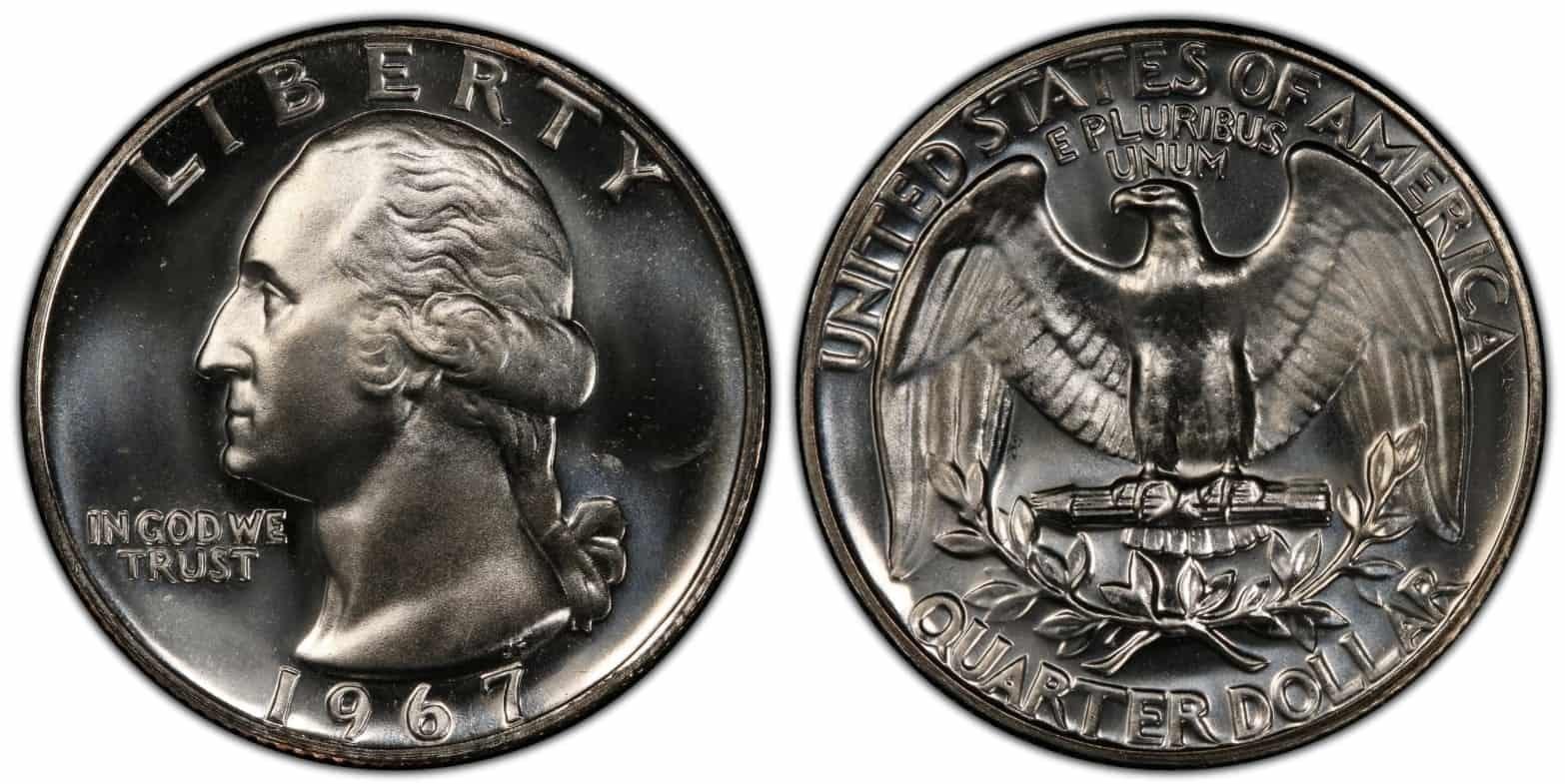
Here’s a shot of a classic Washington quarter error:
If you’re sifting through grandma’s change jar, these are the Washington quarters that are worth money to watch for.
Also Read: Make1m.com Millionaire Lifestyle Secrets for Fast Success.
State Quarters Worth Money: Hidden Treasures from 1999-2009
The State Quarters series got millions into collecting, but most are worth 25 cents. However, errors and silver proofs make some state quarters worth money.
Start with the 1999-P Delaware “Spitting Horse.” A die break creates a line from the horse’s mouth. Circulated: $10-15; mint state: $20-25. It’s tied to Caesar Rodney’s historic ride.
2004-D Wisconsin Extra Leaf: Two varieties—High ($65-85) and Low ($50-65). Look for extra leaves on the corn stalk; genuine ones are raised.
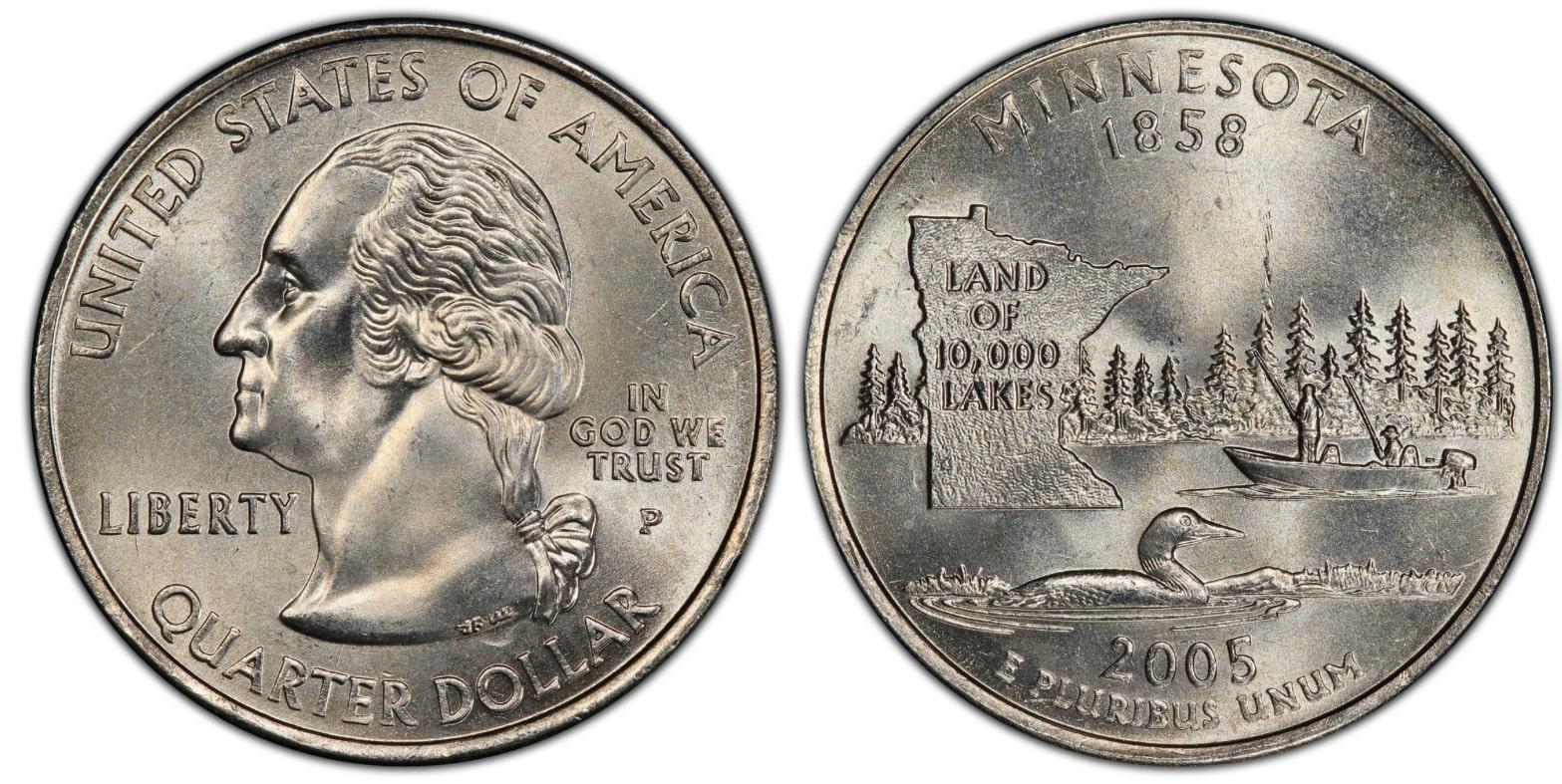
2005-P Minnesota Doubled Dies: Over 60 types, with top ones like Extra Tree at $75-100. Doubling on trees creates a ghostly effect.
2009-D District of Columbia Doubled Die: Doubling on “ELL” in Ellington and piano keys. MS-65: $200+. Honors Duke Ellington.
Silver Proofs: S-mint, 90% silver, $8-10 each, with sets at $45-55. Key like 1999-S Pennsylvania: $35-40.
I collected these as a kid, filling a map board. Little did I know some errors could pay for college books. If you have state quarters, check for these— they could be state quarters worth money.
See this example of a state quarter error:

Modern Quarters Worth Money: Post-1965 Finds
Even clad quarters from 1965 on have value if rare. For instance, the 1965 MS67+ Washington: High grade makes it special.
1971-S Proof with no S mint mark error—rare.
2019-W San Antonio Missions: Low mintage, up to $75,000.
2020-W Marsh-Billings-Rockefeller: $40,000.
These modern quarters worth money show value isn’t just in age.
How to Identify Quarters That Are Worth Money
Spotting quarters that are worth money starts with the basics. Check the date and mint mark (P, D, S). Look for errors with a 10x loupe. Weigh them—silver: 6.25g, clad: 5.67g.
Apps and books help, but get pros to grade via PCGS or NGC. Avoid cleaning coins; it drops their value.
I learned this the hard way—cleaned a quarter once, ruined its patina. Now, I leave them as is.
Also Read: Make1m.com Millionaire Success Journey Guide for You Now.
Where to Sell Your Quarters Worth Money
Found some? Sell at coin shops, auctions, or online like eBay. For big value, use Heritage Auctions. Get appraisals first.
My grandpa’s quarter sold for $50—small, but thrilling. Start small, build confidence.
Wrapping Up Your Hunt for Quarters Worth Money
We’ve covered a lot, from early draped busts to state errors. Whether it’s the quarters worth money list or spotting what quarters are worth money in change, the thrill is in the search. Next time you get change, take a peek—you might join the ranks of lucky finders. Happy hunting, and share your stories in the comments!
For more useful articles, visit my website: Make1M.us.